
Atelier Régional
« Amplifier la voix des femmes affectées par les projets
de la BAD en Afrique de l’Ouest «
Assemblées Annuelles à Abidjan (Côte d’Ivoire)
- 26 et 27 mai à Abidjan
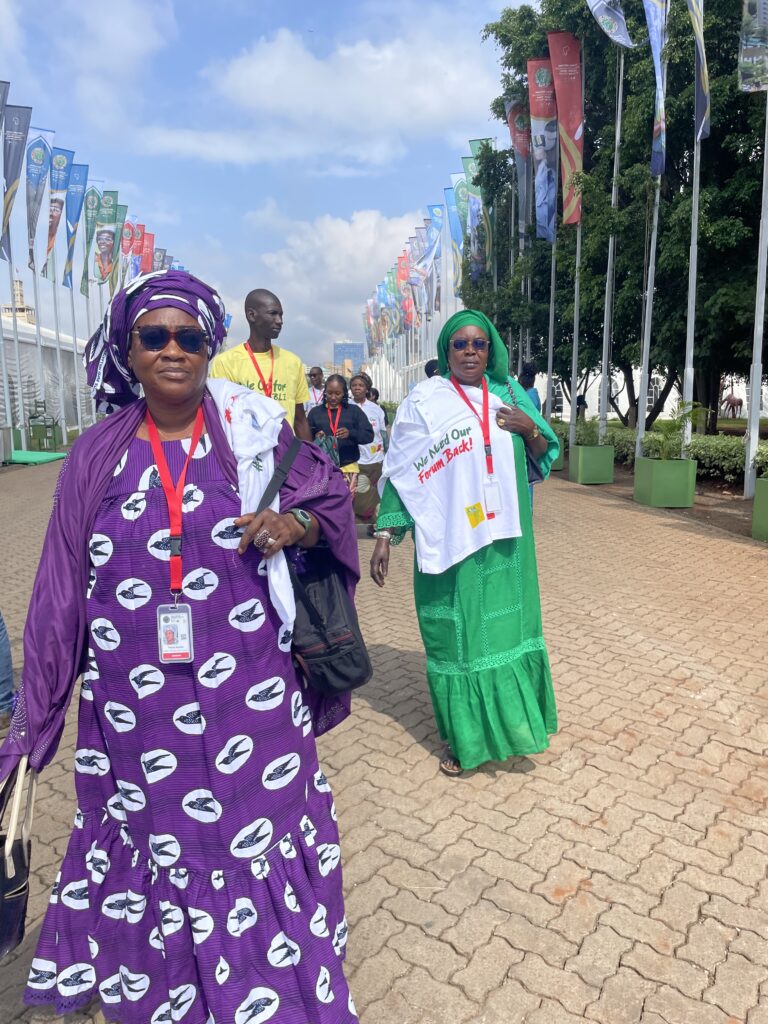
Avec l’appui de la Foundation for a Just Society (FJS), Lumière Synergie pour le Développement (LSD) accompagne des femmes issues de communautés du Sénégal, de la Guinée, de la Côte d’Ivoire et du Burkina Faso à travers des formations, le renforcement de capacités et la défense de leurs droits dans le contexte de résistance face aux nuisances des projets d’infrastructures financées par la BAD dans leurs communautés respectives.
CONTEXTE ET JUSTIFICATION
L’Afrique demeure un paradoxe de Développement, un continent riche en ressources naturelles et malgré tout symbole de pauvreté.
Par ailleurs, au cours de ces dix dernières années, les pays africains ont accompli d’énormes progrès sur le plan macroéconomique. En effet d’après un rapport des Nations unies, entre 2011-2020 la croissance moyenne du PIB africain a atteint 3,1 % dépassant même la moyenne mondiale établie à 2,4 %1.
Cependant, des millions d’Africains, notamment des femmes et des jeunes, n’ont pas profité de cette croissance. Selon la Banque Mondiale, l’Afrique regroupe à elle seule 60 % des 830 millions de personnes vivant dans l’extrême pauvreté dans le monde, soit 380 millions de personnes2
. Et d’après la BAD, si rien n’est fait, l’Afrique abritera près de 9 sur 10 des personnes les plus pauvres du monde (soit 87 %) d’ici 20303.
Afin de stimuler la croissance économique et de saisir les opportunités du continent, les Banques Multilatérales de Développement (BMDs) telles que la Banque Africaine de Développement (BAD), la Banque Mondiale (BM) et les autres Banques Publiques Bilatérales de Développement orientent de plus en plus leurs investissements aujourd’hui dans les infrastructures de grande envergure.
En effet la faiblesse et l’absence d’infrastructures constituent une contrainte majeure et reste un obstacle évident pour le développement de l’Afrique. Ce besoin énorme en matière d’investissement est connu et coûterait selon la BAD respectivement dans les domaines de l’agriculture et des infrastructures environ 315 milliards d’USD et 24,5 milliards d’USD par an. Ainsi durant ces quinze dernières années, de nombreuses initiatives pour réduire ce gap en infrastructures du continent ont vu le jour au niveau international, notamment : ▪PIDA, le Programme pour le Développement des Infrastructures en Afrique en 2012,
▪« Africa 50 » mis en place en 2015 et dotée de 860 millions d’USD,
▪Agenda 2063 de l’Union Africaine lancé en 2013,
▪Compact with Africa sous la houlette du G20 ; et enfin récemment,
▪Mission 300 lancé en 2025 conjointement par la BAD, la BM et la Fondation
Rockefeller.
OBJECTIFS
L’objectif général de cet atelier est d’amplifier la voix des Femmes et des Communautés affectées par les projets d’infrastructures financés par la BAD à travers une participation effective aux Assemblées Annuelles.
De manière spécifique l’atelier vise à :
● Mobiliser les Femmes et des Communautés affectées durant les Assemblées Annuelles de la BAD ;
● Favoriser un partage et une mutualisation d’informations, d’expériences et de
stratégies de plaidoyer pour le respect de leurs droits ;
● Créer une synergie et un espace d’échanges lors des Assemblées Annuelles entre les communautés affectées et les OSC membres du Groupe de Travail sur la BAD pour l’élaboration de meilleures stratégies de luttes ;
RESULTATS ATTENDUS
Les résultats suivants sont attendus à l’issue de l’atelier :
Faire participer au moins 15 femmes affectées aux Assemblées Annuelles de la BAD ;
Faire participer au moins 10 OSC membres du Groupe de Travail sur la BAD aux Assemblées Annuelles de la BAD ;
Renforcer les capacités des femmes affectées sur le Système de Sauvegarde Intégré de la BAD ;
Partager des cas de violations des politiques de la BAD et comment des communautés et des OSC ont travaillé pour protéger les droits sociaux et environnementaux dans des projets d’infrastructures ;
Rencontrer avec ensembles des membres de la Hautes Direction de la BAD et du Conseil d’Administration durant les Assemblées Annuelles de la BAD ;